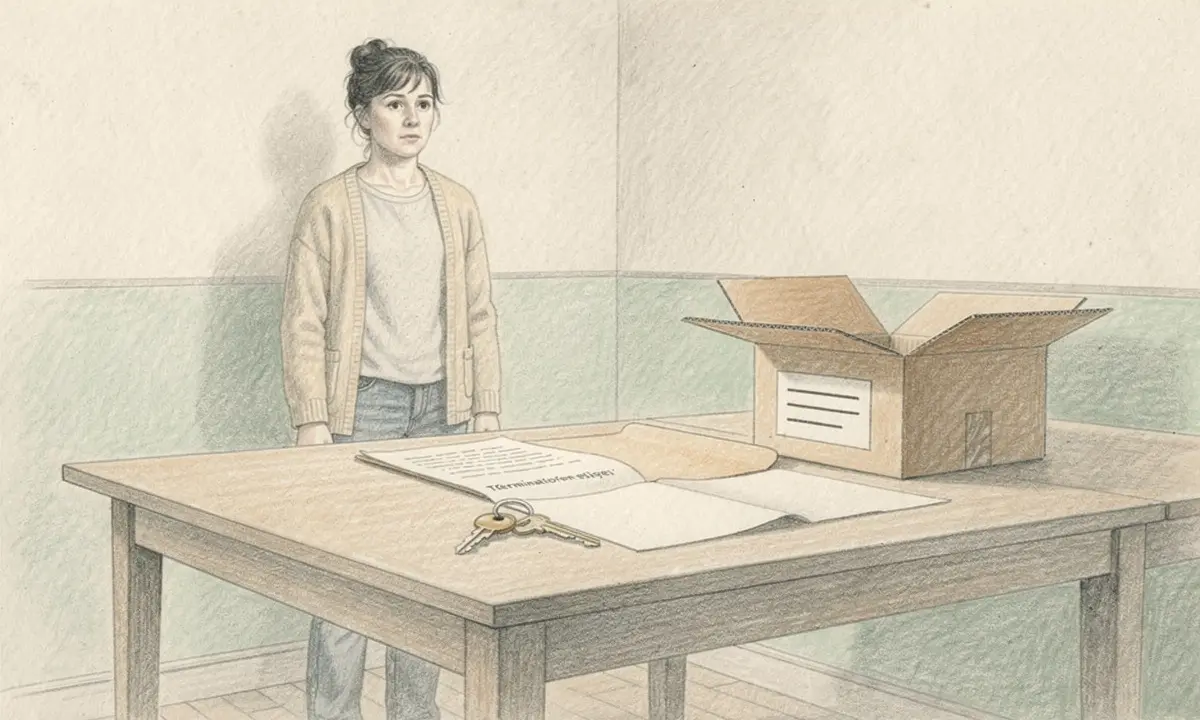
This guide is informational. Always verify how the rules apply to your specific case.
You are here: At home → Security of tenure
The guide belongs to At home. If you already have a termination: contest. The map of the room: what you get and what you must.
When the protection is weaker
- Subletting under two years – the usual extension rules do not apply if the subletting ends before it has lasted two consecutive years, Chapter 12, Section 45, Paragraph 1. See subletting.
- Furnished room / leisure under nine months and part of the lessor's own residence.
- Forfeiture – then the question is whether you have breached, not about extension. See termination.
- Demolition, major renovation, single and two-family houses, the tenant-owner's own need – exceptions that the landlord must demonstrate, and which are often weighed against whether it is unreasonable to you.
Frequently Asked Questions
Do I have to move when the contract period ends?
No, not automatically. That is precisely what the protection tests. Do not pack. See the Rent Tribunal.
Can the landlord claim I misbehaved and skip Section 46?
Serious misconduct can be a ground for exception for extension, and serious crimes can be grounds for forfeiture. These are different assessments. A loud stereo one evening is rarely enough. See rectification demand.
Does the protection apply if I sublet from a tenant-owner?
Weaker, and the tenant-owner's own need is a separate ground for exception. Read Chapter 12, Sections 45 and 46, paragraph 7. Do not confuse with the tenant-owned-flat track.
Sources
Checked: September 14, 2026.
- Land Code Chapter 12, Section 45 (when extension rules do not apply)
- Land Code Chapter 12, Section 46 (right to extension)
- Rent Tribunal
For those reading under stress
The guide is intended as support when you already have a lot on your mind. You do not need to read everything at once: start with the section that matches where you are today and return when the next step becomes relevant.
Cases with authorities rarely improve if you handle everything alone. Ask for help from a support person, lawyer, or relative if you can – especially before decisions with long-term effects.
Common mistakes that make the case more difficult
- Relying only on verbal promises without a short written confirmation or follow-up email.
- Waiting to request documents until the conflict is already locked – then it becomes harder to show what was said.
- Writing so long and emotionally that the authority stops responding to the substantive issue.
- Missing deadlines for reconsideration or appeal because the decision was not read verbatim.
Mini-checklist before leaving the guide
- Do I have the date, diary/case number, and the name of the person handling it (if you know)?
- Do I know what the next step is: respond, request, remind, appeal, or report?
- Have I saved emails and attachments in a place where I can find them in a week?