This guide is informational. Always verify how the rules apply to your specific case.
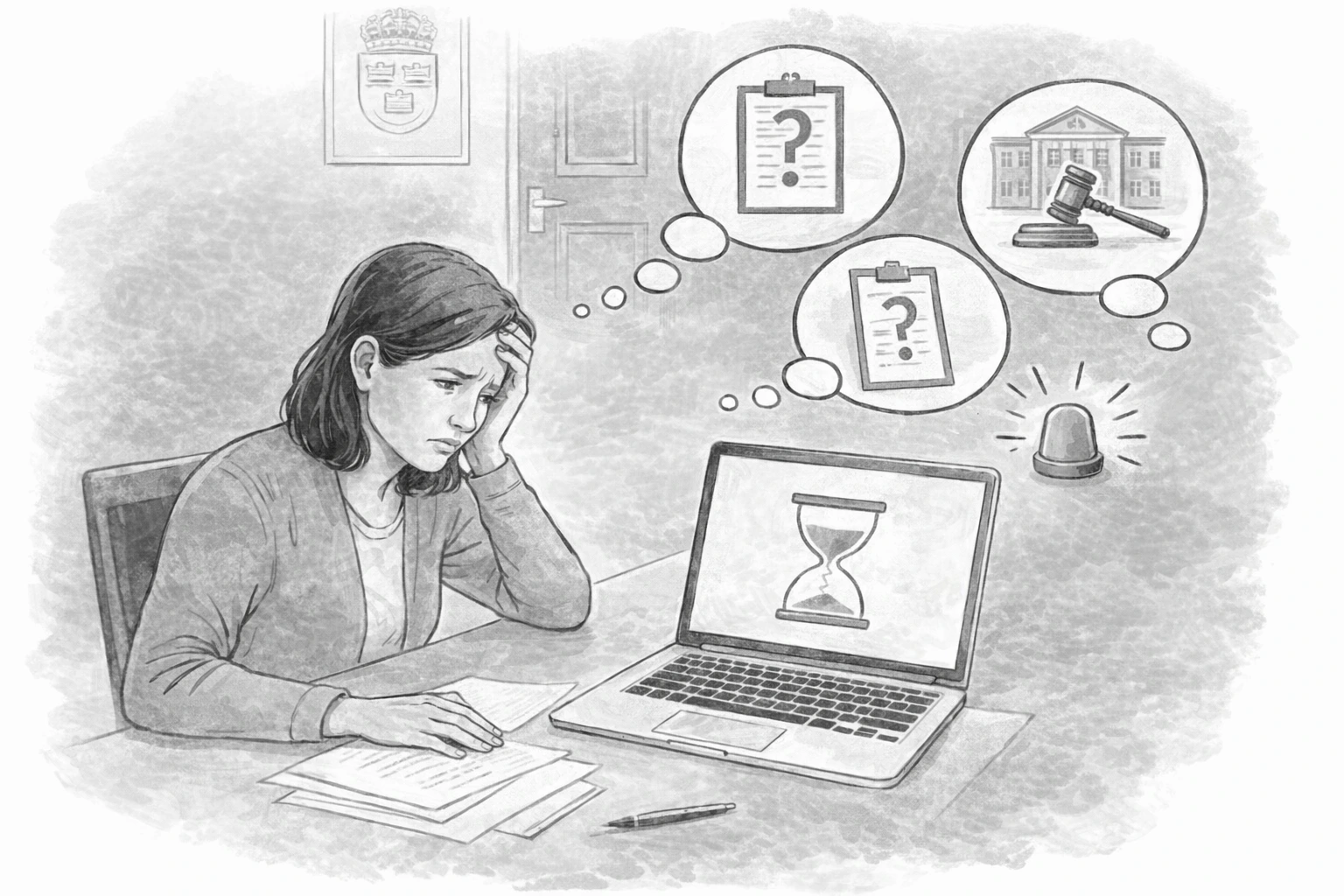
When silence becomes a problem
Many cases get stuck not because of a formal rejection but because nothing happens. Then you need to step up calmly: first a reminder, then a request for information and, if necessary, demand a formal decision that can be challenged
.Three levels of follow-up
- Friendly reminder: refer to previous emails and dates.
- Request status: ask who is in charge and when notification can be expected.
- Request formal decision: if they do not intend to disclose the document, answer the question or proceed with the case.
How to keep the pressure up without losing tone
- Stick to an email thread or a clear subject field per question.
- Save dates, times and names of all contacts.
- Ask for information in writing, even if the contact was first made by phone.
- Ask concrete questions: who, what, when.
Mini-template: reminder
pre> Subject: Reminder in case [diary number/reference] Hi, I will get back to my email from [date] if [question/request]. I would be grateful for information on: 1. Who handles the case 2. When I can expect a response or decision Sincerely, [Name] /pre >Mini-template: request for formal decision
pre> Subject: Request for a written decision on the case [record number/reference] Hi, If the Authority does not intend to grant my request or proceed with the case I would like a written decision or rejection notice with legal support, so that the question can be taken further if necessary. Sincerely, [Name] /pre >When do you move on?
- If documents are not disclosed: request a decision and consider the JO if it drags on time.
- If a decision in substance is delayed: ask for the next formal step and any deadlines.
- If it concerns personal data or privacy: document and consider the IMY trail.
FAQ
How often can I remind?
It depends on the case, but rather matter-of-factly and regularly than many short messages
Should I call or email?
Phone can speed up, but always ask for written confirmation afterwards.
When is JO a better fit than appeal?
Where the problem mainly concerns delays, response or errors in the processing of the case rather than the actual decision.
Build on
- Follow-up email after meeting with authority — template and checklist
- Correct incorrect information in a public authority — how to request a correction
- How to make a JO notification — step by step
For those who read under stress
The guide is meant as support when you already have a lot around your head. You don't have to read everything at once: start with the section that matches where you stand today and come back when the next step becomes relevant
.Affairs with authorities are rarely made better by the fact that you carry everything alone. Ask for help from a support person, lawyer or family member if you can — especially before decisions that
have a long impact.Common mistakes that make the case more difficult
- Trust only verbal promises without brief written acknowledgement or follow-up emails.
- Wait to request documents until the conflict is already locked -- then it will be heavier to show what was said.
- Write so long and emotionally driven that the authority stops answering the factual question.
- Miss deadlines for reconsideration or appeal because the decision was not read verbatim.
Mini-checklist before leaving the guide
- Do I have the date, diary/case number and name of the person handling the case (if you know)?
- Do I know what the next step is: reply, request out, recall, appeal or report?
- Have I saved emails and attachments in a place where I can find them in a week?