
This guide is informational. Always verify how the rules apply to your specific case.
Errors that are not corrected tend to live on
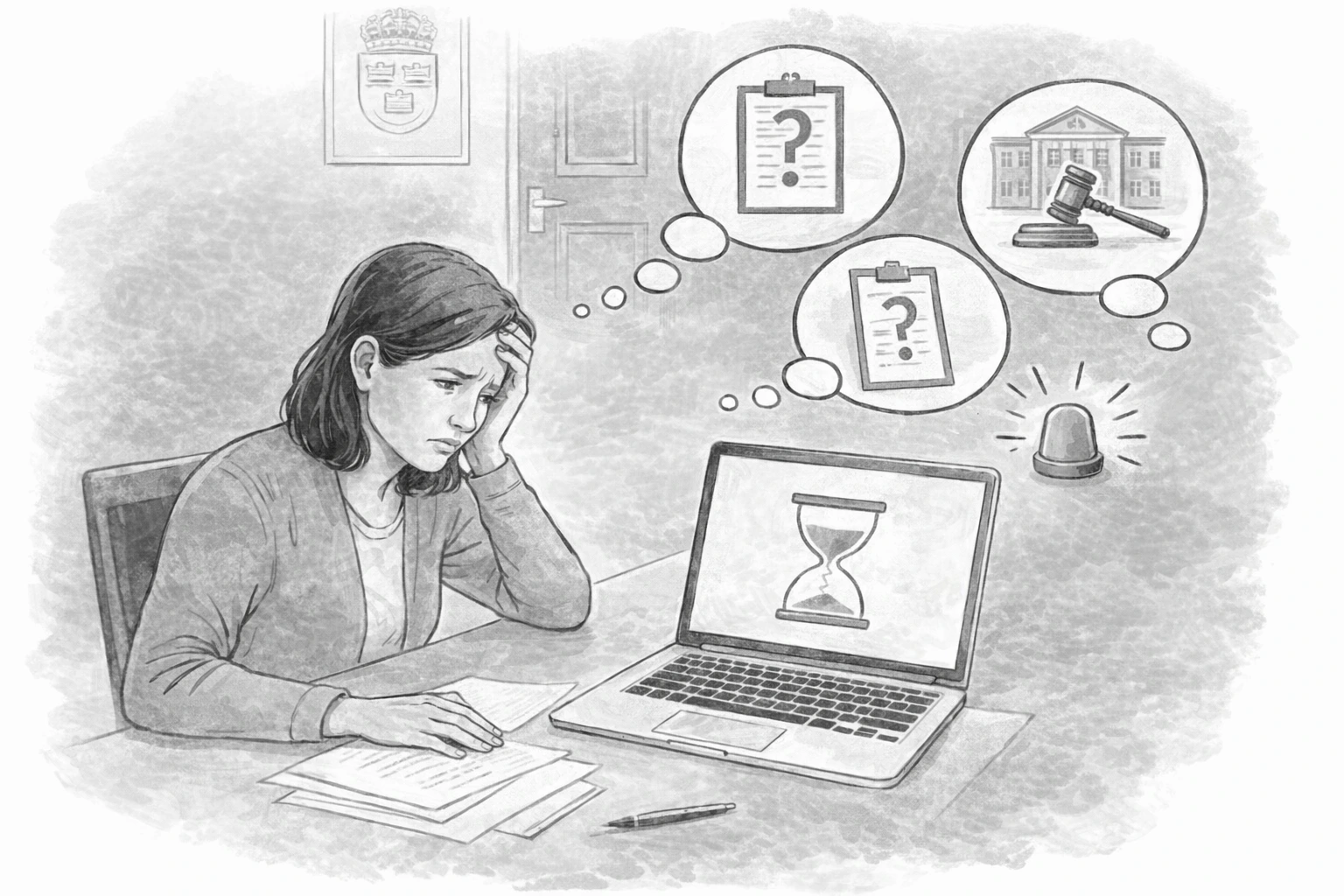
An incorrect service note, journal entry or note in the student act can affect the next appointment, the next decision and the next assessment. Therefore, you need to act quickly, concretely and in writing.
When should you request a correction?
- Wrong dates, people, quotes or sequence of events.
- Claims that lack support or attribute to you something you didn't say.
- Important circumstances omitted even though they were addressed.
Five-step working model
- Point out the exact action: date, page, headline, or note.
- Cite the incorrect: highlight the wording you object to.
- Write your correction: what is instead correct.
- Support your version: refer to emails, recording, documents or other evidence.
- Request notification in writing: ask for confirmation of how the task is handled.
Short template
pre> Subject: Request for correction/completion of the case [entry number] Hi, I have taken note of the note/deed dated [date]. The following task is, in my opinion, incorrect or incomplete: “[citation or summary of the incorrect statement]” My correction: [your correction] In support of this, I refer to: -... -... I would like to be notified in writing of how this correction or supplement will be to be dealt with in the act. Sincerely, [Name] /pre >Corrigendum, supplement or appeal?
Correcting a task is not the same as appealing a decision. Rectification is about the act or note. Appeal is about getting the decision itself reversed. In many cases, you need to do both
.Substrates that help
- Own follow-up email from the meeting.
- Transcription or own notes.
- Incoming messages, calendar bookings or other dated documents.
- Requested documents from the authority if you need to see the full file.
FAQ
Does the authority have to amend the note?
Not always exactly in the way you want, but you can often have your objection or supplement documented
Should I write long?
The No. Short, precise and punctual often turn out to be stronger than long reasoning
What do I do if the error has already affected a decision?
Request a correction in the file, but do not miss the deadline for review or appeal of the decision itself.
Build on
- Follow-up email after meeting with authority — template and checklist
- Requesting Government Documents — Practical Guide
- Appeal the Försäkring's decision — your rights
For those who read under stress
The guide is meant as support when you already have a lot around your head. You don't have to read everything at once: start with the section that matches where you stand today and come back when the next step becomes relevant
.Affairs with authorities are rarely made better by the fact that you carry everything alone. Ask for help from a support person, lawyer or family member if you can — especially before decisions that
have a long impact.Common mistakes that make the case more difficult
- Trust only verbal promises without brief written acknowledgement or follow-up emails.
- Wait to request documents until the conflict is already locked -- then it will be heavier to show what was said.
- Write so long and emotionally driven that the authority stops answering the factual question.
- Miss deadlines for reconsideration or appeal because the decision was not read verbatim.
Mini-checklist before leaving the guide
- Do I have the date, diary/case number and name of the person handling the case (if you know)?
- Do I know what the next step is: reply, request out, recall, appeal or report?
- Have I saved emails and attachments in a place where I can find them in a week?