This guide is informational. Always verify how the rules apply to your specific case.
You are here: At home → Defect in the Apartment
The guide belongs to At home. An untidy apartment is not the same as the landlord neglecting moisture issues. If the landlord uses the deficiency against you as neglect: rectification demand and document first.
House representative can carry documented fault report about common areas into the negotiation. You handle your own apartment in this track, not at the housing meeting.
Frequently asked questions
Do I have to let the landlord in?
For necessary maintenance: yes, after reasonable notice. Refusal of access can become its own ground for forfeiture. Document the times you offered. See Chapter 12, Sections 26 and 42.
Can I terminate myself due to the deficiency?
If the deficiency is of significant importance and is not remedied without delay. It is a different decision than reduction. Take advice before leaving – you may still owe rent.
Are cold and mold “disturbance”?
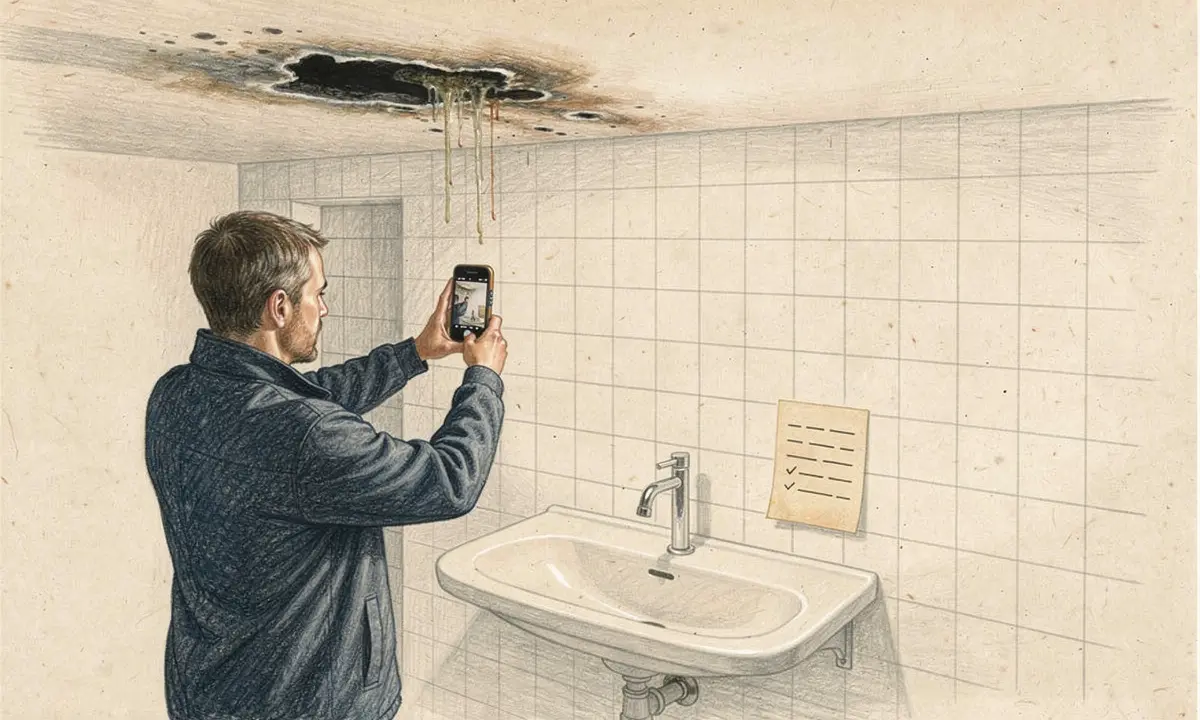
No. Disturbance and conduct refer to how you use the apartment in relation to your neighbors. Deficiency refers to how the landlord maintains it. Do not mix the envelopes. A landlord who calls moisture neglect should be met with fault reports, not with an acknowledgment.
Sources
Reviewed: September 14, 2026.
- Land Code Chapter 12, Section 11 (defect on taking possession, reduction, action order)
- Land Code Chapter 12, Section 16 (defect during the tenancy, action order)
- Land Code Chapter 12, Section 21 (deposit)
- Rent Tribunal
For those reading under stress
The guide is intended as support when you already have a lot on your mind. You do not need to read everything at once: start with the section that matches where you are today and return when the next step becomes relevant.
Matters with authorities rarely improve by carrying everything alone. Ask for help from a support person, lawyer, or relative if you can – especially before decisions with long-term effects.
Common mistakes that make the case more difficult
- Relying only on verbal promises without brief written confirmation or follow-up email.
- Waiting to request documents until the conflict is already locked – then it becomes harder to show what was said.
- Writing so long and emotionally that the authority stops responding to the substantive issue.
- Missing deadlines for reconsideration or appeal because the decision was not read verbatim.
Mini-checklist before you leave the guide
- Do I have the date, diary/case number, and name of the person handling it (if you know)?
- Do I know what the next step is: respond, request, remind, appeal, or report?
- Have I saved emails and attachments in a place where I can find them in a week?