
This guide is informational. Always verify how the rules apply to your specific case.
[[HTMLTAG0]] The new [[HTMLTAG1]] Independent Forfeiture Act [[HTMLTAG2]] allows police and prosecutors to take property suspected of stemming from criminal activity, even when the property cannot be linked to a concrete crime and even if the person is not convicted of a crime. The aim is to crack down on the criminal economy. But the method also creates a stark rights issue: how much property is the state allowed to take when the suspicion is about finances, lifestyle and the proportion between assets and legal income? [[HTMLTAG3]]]
[[HTMLTAG4]]] This is not legally “theft” when the decision has legal support and is tried in the proper order. But for the individual, the effect can be the same as in the case of a property loss: the car, cash, watch, jacket, bag or property disappear from their own control. At the same time, reviews of police seizure custody show that property can also disappear or be handled inadequately inside the authority. Therefore, seizures must be scrutinized both as law enforcement and as privacy intrusions. [[HTMLTAG5]]]
[[HTMLTAG6]] Forfeiture: three concepts that are often confused with [[HTMLTAG7]]]]
[[HTMLTAG8]]] Forfeiture means that ownership of property passes to the state. The new forfeiture legislation that came into force on 8 November 2024 brought together and amended the rules into a new 36 chapters of the Criminal Code. The main concepts are: [[HTMLTAG9]]]
[[HTMLTAG10]]]
[[HTMLTAG11]]] [[HTMLTAG12]] Forfeiture of proceeds of crime: [[HTMLTAG13]]] the state takes money or property that may be linked to a concrete crime. The classic example is money from a certain drug crime, fraud or heirship. The connection to the crime is central. [[HTMLTAG14]]]
[[HTMLTAG15]]] [[HTMLTAG16]]] Expanded Forfeiture: The [[HTMLTAG17]] state may take unexplained assets that need not be directly linked to the particular crime being tried, but it requires that the person be convicted of a forfeiture triggering offense. After the 2024 reform, the proof requirement is worded as being [[HTMLTAG18]] predominantly likely [[HTMLTAG19]] that the property is derived from criminal activity. [[HTMLTAG20]]]
[[HTMLTAG21]]] [[HTMLTAG22]] Independent Forfeiture: [[HTMLTAG23]] The state can take property without anyone being convicted or even charged with a particular crime. The question instead becomes whether the property is disproportionate to legitimate income and whether it is [[HTMLTAG24]] clearly more likely [[HTMLTAG25]] to originate from criminal activity than to have legal origin. [[HTMLTAG26]]]
[[HTMLTAG27]]]
[[HTMLTAG28]] The big news, then, is not that the state can take crime profits. The state could do that before. The novelty is that a forfeiture trail can be pursued more independently from the criminal case, and that coercive means such as seizure, money seizure and sequestration can be used to secure property while the issue of forfeiture is being tried. [[HTMLTAG29]]]
div data-confiscation-concepts-chart>/div>
[[HTMLTAG30]]] What changed with the 2024 reform? [[HTMLTAG31]]]
[[HTMLTAG32]]] The reform included: [[HTMLTAG33]]]
[[HTMLTAG34]]]
[[HTMLTAG35]]] A new 36 chapter of the Criminal Code on confiscation of property and corporate fines. [[HTMLTAG36]]]
[[HTMLTAG37]]] A new forfeiture form: [[HTMLTAG38]]] independent forfeiture [[HTMLTAG39]]]. [[HTMLTAG40]]]
[[HTMLTAG41]] A new law on the confiscation procedure governing independent forfeiture investigations. [[HTMLTAG42]]]
[[HTMLTAG43]]] Expanded opportunities to use coercive means to secure property, such as seizure and sequestration. [[HTMLTAG44]]]
[[HTMLTAG45]] Money seizure became a more general coercive means of securing, for example, bank funds or electronic money. [[HTMLTAG46]]]
The [[HTMLTAG47]] rules allow the seizure of property that is difficult to tie to a specific crime but appears inexplicable in relation to lawful income. [[HTMLTAG48]]]
[[HTMLTAG49]]]
[[HTMLTAG50]] The legal certainty issue is that the state no longer always has to prove a concrete underlying crime before the property is seized. The court is still to review the forfeiture, but the individual may have lost control of the property even before final review. [[HTMLTAG51]]]
[[HTMLTAG52]]] Amount and open cases [[HTMLTAG53]]]
[[HTMLTAG54]] SVT reported in May 2025 that the Police had [[HTMLTAG55]] 221 open cases in [[HTMLTAG56]] where the value of seizures under the new law amounted to approximately [[HTMLTAG57]] 57 million SEK [[HTMLTAG58]]. The police stated in January 2026 that in 2025 it had initiated [[HTMLTAG59]] 120 [[HTMLTAG60]] cases of independent confiscation and by the end of January 2026, [[HTMLTAG61]] had just under 300 pending cases [[HTMLTAG62]]. [[HTMLTAG63]]]
[[HTMLTAG64]] At the same time, the police reported a particularly high-profile property case: Attunda District Court had decided on a lien for a property with an estimated value of SEK 19.2 million [[HTMLTAG66]], within the framework of an independent investigation into independent forfeiture. The suspicion was that the property was financed with funds from criminal activity. It is important to state precisely the suspicion: the forfeiture issue itself is to be judicially examined. [[HTMLTAG67]]]
[[HTMLTAG68]]] On the [[HTMLTAG69]] statistics page [[HTMLTAG70]] there is a graph of openly reported values in independent forfeiture. It should be read carefully because different sources measure different things: open cases, individual lien decisions, seizures and possibly later forfeiture. [[HTMLTAG71]]]
[[HTMLTAG72]]] This is how independent forfeiture works in practice [[HTMLTAG73]]]
[[HTMLTAG74]]] The police authority describes the law as follows: property does not have to be linked to a concrete crime or a tangible crime gain. Police and prosecutors must show that the property is likely to have originated from criminal activity, including because the value is disproportionate to the person's legal income or other legal assets. [[HTMLTAG75]]]
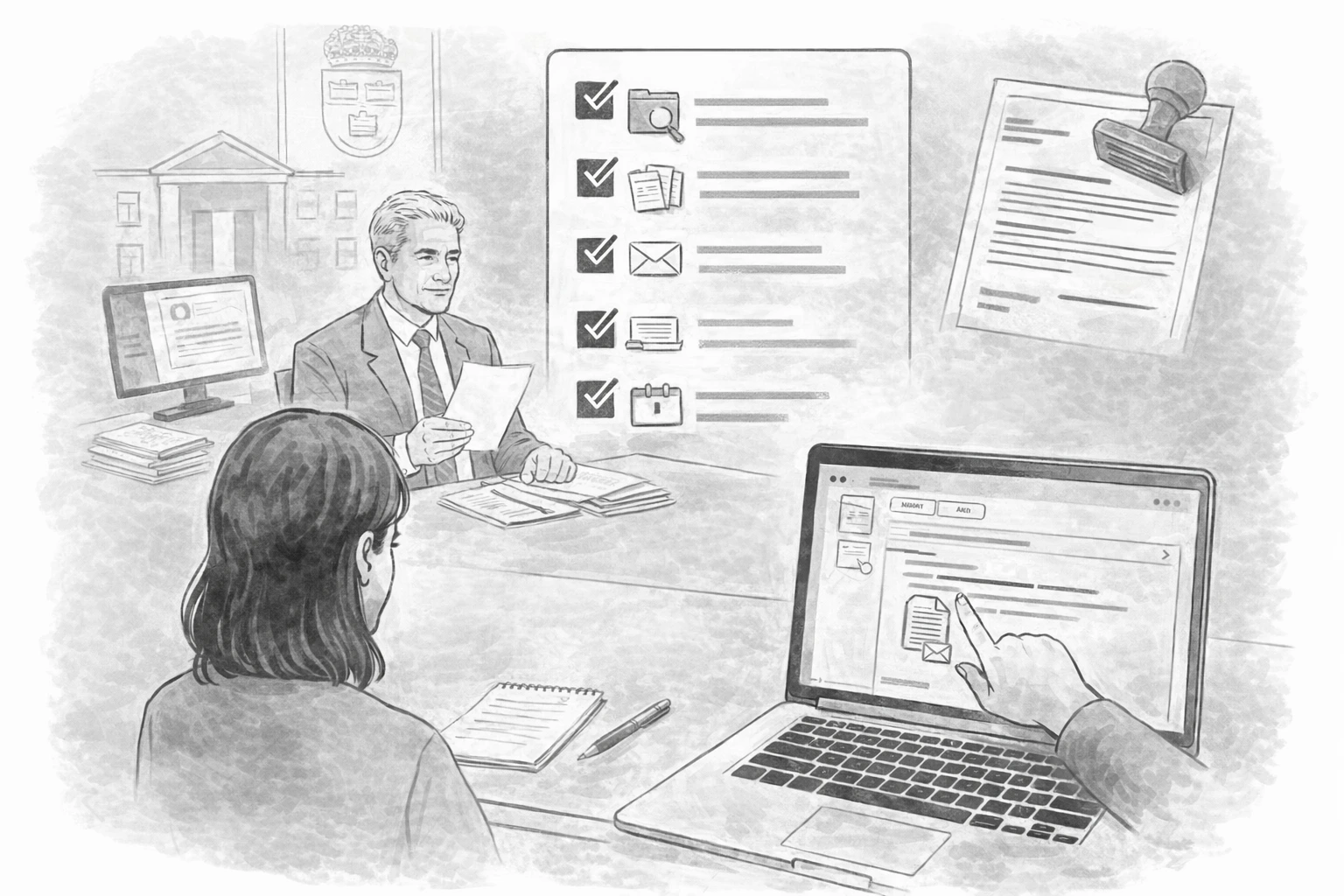
[[HTMLTAG76]]] The process involves simplified: [[HTMLTAG77]]]
[[HTMLTAG78]]]
[[HTMLTAG79]] Police come across property deemed unexplained in relation to the person's finances. [[HTMLTAG80]]]
[[HTMLTAG81]] The police can initiate investigation and seize property. [[HTMLTAG82]]]
[[HTMLTAG83]] The case is to be taken over by prosecutors. [[HTMLTAG84]]]
[[HTMLTAG85]]] The prosecutor requests forfeiture in court. [[HTMLTAG86]]]
[[HTMLTAG87]] The court examines whether the property is clearly more likely to originate from criminal activity than to have legal origin. [[HTMLTAG88]]]
[[HTMLTAG89]]] If the property is forfeited, it is sold and the money accrues to the state. [[HTMLTAG90]]]
[[HTMLTAG91]]]
[[HTMLTAG92]]] According to the Police, the person from whom the property is taken is not suspected of a crime solely through an independent confiscation. That's an important formal distinction. But from a privacy point of view, the intervention is nevertheless heavy: the state can search and seize property, ask for financial explanations, and shift burden-of-proof practical pressure to the individual, even when a concrete crime is not substantiated. [[HTMLTAG93]]]
[[HTMLTAG94]]] Privacy and Rights Criticism [[HTMLTAG95]]]
[[HTMLTAG96]] SVT already reported when the law was introduced that it had been criticized by, among others, the Ombudsman for Justice, who warned of a lack of legal certainty if seizures are made on loose grounds. The criticism is not about criminal profits being protected. It is about the control of the means of power. [[HTMLTAG97]]]
[[HTMLTAG98]]]
[[HTMLTAG99]]] [[HTMLTAG100]]] Unclear title: [[HTMLTAG101]] property in someone's possession can be assumed to belong to that person, even when the registered owner is someone else. [[HTMLTAG102]]]
[[HTMLTAG103]]] [[HTMLTAG104]] Lifestyle Assessment: [[HTMLTAG105]]] watches, cars, clothing, cash and jewelry can become evidence questions about the person's finances and sociability. [[HTMLTAG106]]]
[[HTMLTAG107]]] [[HTMLTAG108]] Third party risk: [[HTMLTAG109]]] relatives, partners, children or friends may suffer if property is written, lent or stored in a manner misinterpreted by the Authority. [[HTMLTAG110]]]
[[HTMLTAG111]]] [[HTMLTAG112]]] Privacy Infringement: [[HTMLTAG113]] body visitation, search warrant, financial mapping, and private property inspection can occur without there being a common criminal suspicion against the person. [[HTMLTAG114]]]
[[HTMLTAG115]]] [[HTMLTAG116]] Practical burden of proof: [[HTMLTAG117]] although the state is formally required to show its, in practice the individual may need to show receipts, payment flows, loans, gifts, and ownership history. [[HTMLTAG118]]]
[[HTMLTAG119]]] [[HTMLTAG120]] Value drop and time: [[HTMLTAG121]] cars, watches, electronics and clothing may lose value while the case is being tried. It can be difficult to fully repair even if the owner later gets it right. [[HTMLTAG122]]]
[[HTMLTAG123]]]
[[HTMLTAG124]]]] Loaned car: when the bailiff takes the car at police inspection [[HTMLTAG125]]]
[[HTMLTAG126]]] SVT Blekinge warned in 2026 of a nearby but legally different situation: The bailiff can take a car that you have lent if the driver has debts and is stopped by the police. The SVT refers to the presumption in Chapter 4, Section 18 of Chapter 4: the debtor is considered to be the owner of movable property in his possession, unless it is clear that the property belongs to someone else. [[HTMLTAG127]]]
[[HTMLTAG0]] Aftonbladet described the case of Ebba Olsson, who lent his car to a man in debt. When he was stopped by police, the Crown Prosecution Service seized the car, even though she stated that it was hers. She tried, according to the article, to prove ownership with registration certificates, bank statements, text messages, inspections and parking tickets, but was told to rectify and appeal. [[HTMLTAG1]]]
[[HTMLTAG2]]] This is not independent forfeiture. It's foreclosure for debt. But the risk for third parties is similar: anyone who lends, keeps or lets someone use property may be forced to prove ownership quickly, sometimes only after the property has already been taken. [[HTMLTAG3]]]
[[HTMLTAG4]] Warning: Do not lend cars or valuables casually [[HTMLTAG5]]]
[[HTMLTAG6]] If you lend a car, expensive watch, phone, computer, tool, or other valuables to someone with debts, criminal connection or unclear income, you may find yourself in a problem of proof. This is true even if you are the real owner. [[HTMLTAG7]]]
[[HTMLTAG8]]]
[[HTMLTAG9]]] Avoid lending a car to someone you know has big debts. [[HTMLTAG10]]]
[[HTMLTAG11]]] If you are lending anyway, write a simple loan agreement with the date, time, purpose and that ownership is yours. [[HTMLTAG12]]]
[[HTMLTAG13]]] Save purchase agreements, bank statements, insurance, service history and text messages where the loan is stated. [[HTMLTAG14]]]
[[HTMLTAG15]]] Do not allow anyone else to have long-term, exclusive possession of your property if you want to be able to show that it is yours. [[HTMLTAG16]]]
[[HTMLTAG17]]] If the property is taken: request a written order, record number, seizure/seizure protocol and information on how to appeal. [[HTMLTAG18]]]
[[HTMLTAG19]]] Request inhibition or prompt review if sale/auction is imminent. [[HTMLTAG20]]]
[[HTMLTAG21]]]
[[HTMLTAG22]]] When property disappears from the authority [[HTMLTAG23]]]
[[HTMLTAG24]] The risks do not stop once the property is in the hands of the authorities. In 2019, Expressen/GT reviewed data on police officers who stole seized goods in Gothenburg. The article describes internal chats in which police officers joked or wrote about seized power tools, a “shovel” of goods, and details of tools that went missing without being recorded in pre-investigation protocols. GT also wrote that for five years there have been between 200 and 300 reported cases a year of thefts linked to police employees in the country, leading to prosecution or conviction. [[HTMLTAG25]]]
[[HTMLTAG26]]] Sydsvenskan reported on a mysterious theft in the police's warehouse in Malmö, where alarms went off several times but were initially assessed as incorrect. That kind of data demonstrates a separate legal certainty issue: when the state takes property, the state must be able to show the chain from seizure to return, confiscation or sale. [[HTMLTAG27]]]
[[HTMLTAG28]]] It is not enough for the authority to say that the property was “rubbish”, “tool of crime” or “unexplained”. Each item must be able to be followed. If goods are not registered, a gap opens where the owner does not have a receipt for what has been taken and the authority has no control over what is lost. [[HTMLTAG29]]]
[[HTMLTAG30]]] Your rights and practical steps [[HTMLTAG31]]]
[[HTMLTAG32]]]
[[HTMLTAG33]]] [[HTMLTAG34]] Request minutes directly: [[HTMLTAG35]]] seizure, seizure, sequestration or disposal shall be able to be described in writing. [[HTMLTAG36]]]
[[HTMLTAG37]]] [[HTMLTAG38]] Request decision makers and record number: [[HTMLTAG39]]] ask who made the decision, on what basis and where the case is being handled. [[HTMLTAG40]]]
[[HTMLTAG41]]] [[HTMLTAG42]] View ownership structured: [[HTMLTAG43]]] purchase deed, payment, insurance, service, keys, loan agreement, text message and witnesses. [[HTMLTAG44]]]
[[HTMLTAG45]]] [[HTMLTAG46]] Separating the tracks: [[HTMLTAG47]] The bailiff's forfeiture, the police seizure, and the prosecutor's request for confiscation have different rules and avenues of appeal. [[HTMLTAG48]]]
[[HTMLTAG49]]] [[HTMLTAG50]] Act quickly at auction: [[HTMLTAG51]]] If the property is to be sold, you must request a correction/appeal and ask for the sale to be stopped pending review. [[HTMLTAG52]]]
[[HTMLTAG53]]] [[HTMLTAG54]]] If property is missing: [[HTMLTAG55]]] request inventory list, seizure number, who had access to the repository, log and written investigation of what happened. [[HTMLTAG56]]]
[[HTMLTAG57]]] [[HTMLTAG58]] Consider JO or damages: [[HTMLTAG59]] especially if the authority cannot account for property management, fails to respond or sells property despite owner objection. [[HTMLTAG60]]]
[[HTMLTAG61]]]
[[HTMLTAG62]] The new forfeiture legislation can be a powerful tool against crime gains. But powerful tools need to have powerful control. Otherwise, the principle of “crime shall not pay” risks slipping into the state taking first and the individual being allowed to prove his innocence, ownership and integrity afterwards. [[HTMLTAG63]]]
[[HTMLTAG64]]] Sources [[HTMLTAG65]]]
[[HTMLTAG66]]]
[[HTMLTAG67]]] [[HTMLTAG68]] Government: New law provides new opportunities to seize criminals' assets [[HTMLTAG69]]] [[HTMLTAG70]]]
[[HTMLTAG71]]] [[HTMLTAG72]]] Riksdag: A new forfeiture legislation [[HTMLTAG73]]] [[HTMLTAG74]]]
[[HTMLTAG75]]] [[HTMLTAG76]]] The Judge Blog: New forfeiture legislation, what is forfeiture and what is new? [[HTMLTAG77]]]] [[HTMLTAG78]]]
[[HTMLTAG79]]] [[HTMLTAG80]] Police Authority: Independent Forfeiture [[HTMLTAG81]]] [[HTMLTAG82]]]
[[HTMLTAG83]]] [[HTMLTAG84]]] SVT Stockholm: Car for half a million seized [[HTMLTAG85]]] [[HTMLTAG86]]]
[[HTMLTAG87]]] [[HTMLTAG88]] SVT Öst: Luxury gadgets for SEK 57 million seized [[HTMLTAG89]]] [[HTMLTAG90]]]
[[HTMLTAG91]]] [[HTMLTAG92]] Police Authority: Multi-million villa may be forfeited [[HTMLTAG93]]] [[HTMLTAG94]]]
[[HTMLTAG95]]] [[HTMLTAG96]]] SVT Blekinge: Then the bailiff can take your loaned car [[HTMLTAG97]]] [[HTMLTAG98]]]
[[HTMLTAG99]]] [[HTMLTAG100]]] Aftonbladet: Lending a car to a man in debt [[HTMLTAG101]]] [[HTMLTAG102]]]
[[HTMLTAG103]]] [[HTMLTAG104]]] Expressen/GT: The alarm about police officers stealing seized goods [[HTMLTAG105]]] [[HTMLTAG106]]]
[[HTMLTAG107]]] [[HTMLTAG108]]] Sydsvenskan: Mysterious theft in the police's warehouse [[HTMLTAG109]]] [[HTMLTAG110]]]
[[HTMLTAG111]]]