
This guide is informational. Always verify how the rules apply to your specific case.
Short answer: As of July 1, 2026 There is a crime psychological violence in the Criminal Code. This may be repeated violations, threats, coercion, or surveillance that, in aggregate, have been designed to seriously damage self-esteem — not occasional quarrels. The penalty is imprisonment for a maximum of four years. The law doesn't change that you still have to be able to show a pattern and that police and prosecutors make an assessment in each case.
This guide is written for those who are wondering if what you are living with could be punishable, or who want to understand the difference from previous legal situations before reporting to the police, seeking protection or documenting for a future investigation.
What has changed on July 1, 2026?
Parliament has adopted the Government's proposal in Prop. 2025/26:138. A new penal provision psychological violence is introduced into the Criminal Code. According to the report of the Committee on Justice The law aims to capture abusive behavior patterns that are used to control or break down a person, but which in the past often fell outside the scope of the punishable.
Gender Equality Authority describes the change in the law as a step to make clear that psychological violence is unacceptable, especially in violence in intimate relationships and honor contexts. Swedish Radio has reported that the offence will take effect July 1, 2026.
What counts as psychological violence under the law?
The text of the law is based on repetition and a collected pattern. Single words in affect or an occasional quarrel are not usually enough. What can become punishable is to repeatedly subject someone to violations in the form of:
- recriminations and insults
- derogatory statements and humiliating behaviour
- Unreasonable Threats (for example, threats of suicide, violence against you or someone close to you)
- undue coercion (for example, coercion to wear religious attire or conversion attempts by threats or pressure)
- undue monitoring -- including lasting monitoring via GPS, apps or similar
It is necessary that the violations overall been devoted to seriously damage the person's self-esteem. So it is a matter of a pattern over time, not that each individual act has to be gross in itself.
The government especially lifts economic violence and controlling behaviors that are often part of psychological violence, even when not always outwardly visible. Digital surveillance, phone control, social media and everyday life are mentioned in the preliminary papers as typical examples in young people's relationships.
Statistics: how common is psychological violence — and how big is the darkness rate?
Even before the change in the law, psychological violence was the most common violence in intimate relationships, but it was rarely reported to the police. That is the background to both the law reform and why many may still experience that “nothing happens” even after July 1.
| Source/Measurements | What the figure shows |
|---|---|
| Abrupt, crime in close relationship (2022) | 13.6 percent of the population aged 16—84 were subjected to some violence in intimate relationships in 2022. |
| Sudden, psychological violence 2022 | 12.9 percent of women and 10.7 percent of men were subjected to psychological violence (violations, humiliations, control). |
| Brå, police report | Among those who suffered intimate relationship violence in 2022, only police reported 2.7 percent. Mental violence was reported to the lowest extent. |
| NCK, Lifetime Vulnerability | 20 percent of women and 8 percent of men had been subjected to repeated, systematic psychological violence by partners after the age of 18. |
| NCK, dark speech (estimate) | Around a quarter of intimate partner violence is reported to the police; the rest never reach the crime statistics. |
What the dark speech means in practice: Crime statistics mainly show what has been reported and recorded as a crime. With psychological violence now becoming its own crime, more incidents can in theory be recorded — but only if the victims dare to report, dare to remain in the process and if the police/prosecutor judge that the evidence is sufficient. Brå has previously pointed out that psychological violence was reported particularly rarely precisely because it was not always a crime in the legal sense. That gap is now narrowing, but fear, shame, financial dependence and uncertainty about evidence remain.
For a deeper examination of figures and source criticism, see the Counter's article psychological violence — statistics and darkness.
How is the law supposed to be applied?
The legislature emphasizes that psychological violence should be viewed as a patterns, not as a checklist where each point separately has to be proven as aggravated felony. In practice, however, police and prosecutors will still ask:
- Has the behavior been repeatedly?
- Is there a unified purpose to control, humiliate or isolate?
- Is it likely that self-esteem seriously injured over time?
- Is there documentation: messages, witnesses, records, police reports, protective measures?
The offence may also be included as part of other offences, for example gross violation of the peace, gross violation of women's freedom, Unlawful persecution, oppression of honor and child peace offences. This means that the same behaviors can be prosecuted both as psychological violence and as part of a heavier crime, depending on the circumstances.
The Swedish Agency for Gender Equality stresses that the law will only take effect if the police, social services and health care are aware of it. Training and procedures do not always keep pace with the text of the law from day one.
Practical steps if you are a victim of psychological violence
- Safety first. If you are threatened: 112, sheltered accommodation, Kvinnofridslinie. Take threats of suicide or violence against children seriously.
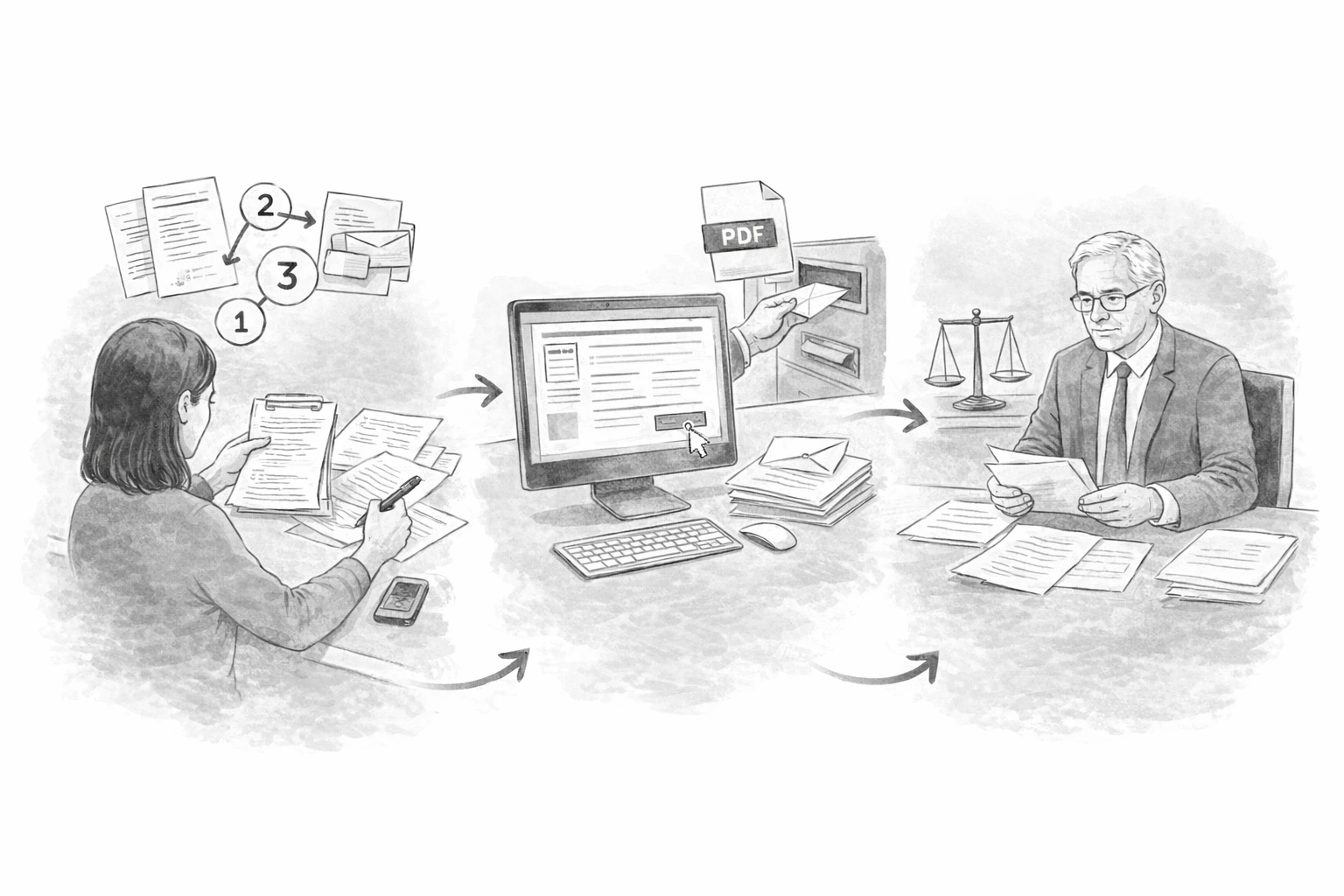
- Document the pattern. Save messages, voice memos, emails and screenshots with dates. Write a simple timeline: what happened, when, who saw or heard. behold recording of calls if you participate yourself.
- Police report. After July 1, 2026, repeated mental violence can be reported as its own crime. Describe the repetition and attach examples, not just the worst day.
- Protection and support. Social services, patient record, support person. In case of concern about children, see Child Concern.
- Request documents. If authorities are already involved: journal, diary, decision. behold request government documents.
- If the processing is flawed. JO Notification in case of delay or frivolous handling.
FAQ: psychological violence as a crime from July 1, 2026
Is mental violence criminal from July 1, 2026?
Yes. Parliament has adopted a special penal provision. The offence can bring imprisonment for a maximum of four years.
Is a single mean text message enough?
Often no. The law takes aim at reiterated violations that, on the whole, seriously damage self-esteem. Single outbreaks may, in exceptional cases, form part of a pattern, but the assessment is holistic.
Does the law only apply in couple relationships?
No in principle, but the preparatory works emphasize violence in close relationships, the context of honor and the relationships of young people. The perpetrator does not have to be a partner, but the closeness of the relationship often affects how serious the pattern is assessed in the context of a breach of the peace.
Is financial control included?
Yes, according to the government's description, economic violence and control of money can be part of the pattern of psychological violence that the law aims to capture.
Is GPS tracking and checking the mobile included?
Yes. Sustained undue monitoring via apps or GPS can be covered, even without repeated insults in the classic sense.
What if the police say it's not a crime?
Ask for written notice and diary number. You can request the opening of a preliminary investigation, appeal certain decisions or contact prosecutors. Document what was said. In case of misconduct: JO.
Does the law change that I am automatically entitled to a custody dispute or division of property?
The No. Criminal law is a trail. Family law processes follow other rules, but police reports and documentation can become the basis there.
Where can I get help if I don't want to report to the police yet?
Kvinnofridslinie, Crime Victim Support, Youth Reception, Social Services or Health Centre. You can document and apply for support without registering directly.
Sources
- Prop. 2025/26:138 A Special Penal Provision for Mental Violence
- Report 2025/26: juU39
- Gender Equality Agency: Strengthening protection against psychological violence
- Swedish Radio: Mental violence becomes crime in Sweden
- Brå: Crime in a Close Relationship (2024)
- NCK: Violence in intimate relationships