
This guide is informational. Always verify how the rules apply to your specific case.
The principle of disclosure is one of the most important rights when you have contact with an authority. It allows you to request documents and check what the authority has actually written, decided, received and sent. For those who question a decision from the social services, the school, the police, Försäkringskassan, the Swedish Tax Agency, the Swedish Health Service or the Migration Agency, the documents can be the difference between guesswork
and evidence.This guide explains how to apply the principle of public disclosure in practice: what a public document is, how to write a public record request, how confidentiality works, what to do in case of delay, and how to obtain an appeal decision.
The principle of public disclosure briefly explained
The principle of openness means that the public and the media have the right to transparency in the activities of the authorities. The government describes it as a fundamental part of Sweden's democratic system. Practically the most important part is the right to access public documents.
The rules are mainly contained in the Freedom of the Press Regulation. The privacy restrictions are mainly found in the Public Information and Secrecy
Act.What is a general act?
An act is not just a piece of paper. It can be email, text message, chat, protocol, service note, decision, journal note, audio file, movie, log, agreement, invoice, map or a task in a system. In order for the document to be general, it must normally be kept with the authority and either received or drawn up
.- Received: the document has arrived at the authority, for example an email from a private individual, supplier or other authority.
- Done: the document has been completed, dispatched, adjusted or otherwise given final form.
- In custody: the authority has the document or can produce it with routine measures.
All internal notes are not automatically general. Clean drafts and working materials may sometimes be excluded. But government agencies sometimes use “work materials” too broadly. If the document has been taken care of, the case adds factual information or is actually used as evidence, the issue may need to be examined more thoroughly
.You do not normally have to justify the request
You don't normally have to explain why you want documents. The authority must not make the right to transparency conditional on you having “the right reasons”. In some cases, the authority may need to know who you are in order to conduct a privacy check, for example, whether party transparency or privacy to protect yourself is up to date. But the starting point is that the request should be tried against the documents, not against your person
.However, it is wise to be concrete. The more clearly you describe the actions, the harder it will be for the authority to say it doesn't understand what you mean
.What can you request from different authorities?
- Social services: journal entries, decision documentation, investigations, received reports of concerns, meeting notes and board decisions.
- Police: incident reports, notifications, service notes, decision documents, register logs and some camera documentation, with confidentiality checks.
- School: pupil alert, action programme, investigations on special support, meeting notes, headmaster's decisions and communication.
- Försäkringskassan: decision basis, communication with the health service, internal assessments that add factual data to the case and journal materials used.
- Municipality: board minutes, agreements, procurements, invoices, delegation decisions, emails and service statements.
- Healthcare: patient records are often requested through the procedures of the Patient Data Act, but public and confidentiality issues can also become relevant in public care.
Privacy doesn't automatically mean no
The Authority shall carry out a confidentiality check. Where certain information is subject to confidentiality, the Authority shall examine whether the rest can be disclosed. You can therefore request masked disclosure. It is common for names, social security numbers, sensitive data or trade secrets to be masked while the rest of the document
is disclosed.If the authority refuses, ask for legal support. “It's secrecy” is not enough. Ask for which paragraph is used and for a written decision on the act not to be disclosed.
How quickly should the agency respond?
A request for public documents shall be dealt with expeditiously. The Freedom of the Press Regulation states that documents which may be disclosed shall be provided immediately or as soon as possible. If the request is simple, it should often go quickly. If the request is extensive or requires a confidentiality review, it may take longer, but the Authority will still work actively on
the matter.You should be wary of standard answers that say nothing concrete:
- “We'll get back to you when the agent has time.”
- “You have to wait until the case is finished.”
- “We first need to know why you want the documents.”
- “It's work material” without further explanation.
- “Everything is subject to confidentiality” without clause or partial review.
How to write an effective request
A good request is short, concrete and traceable. It does not have to be legally advanced
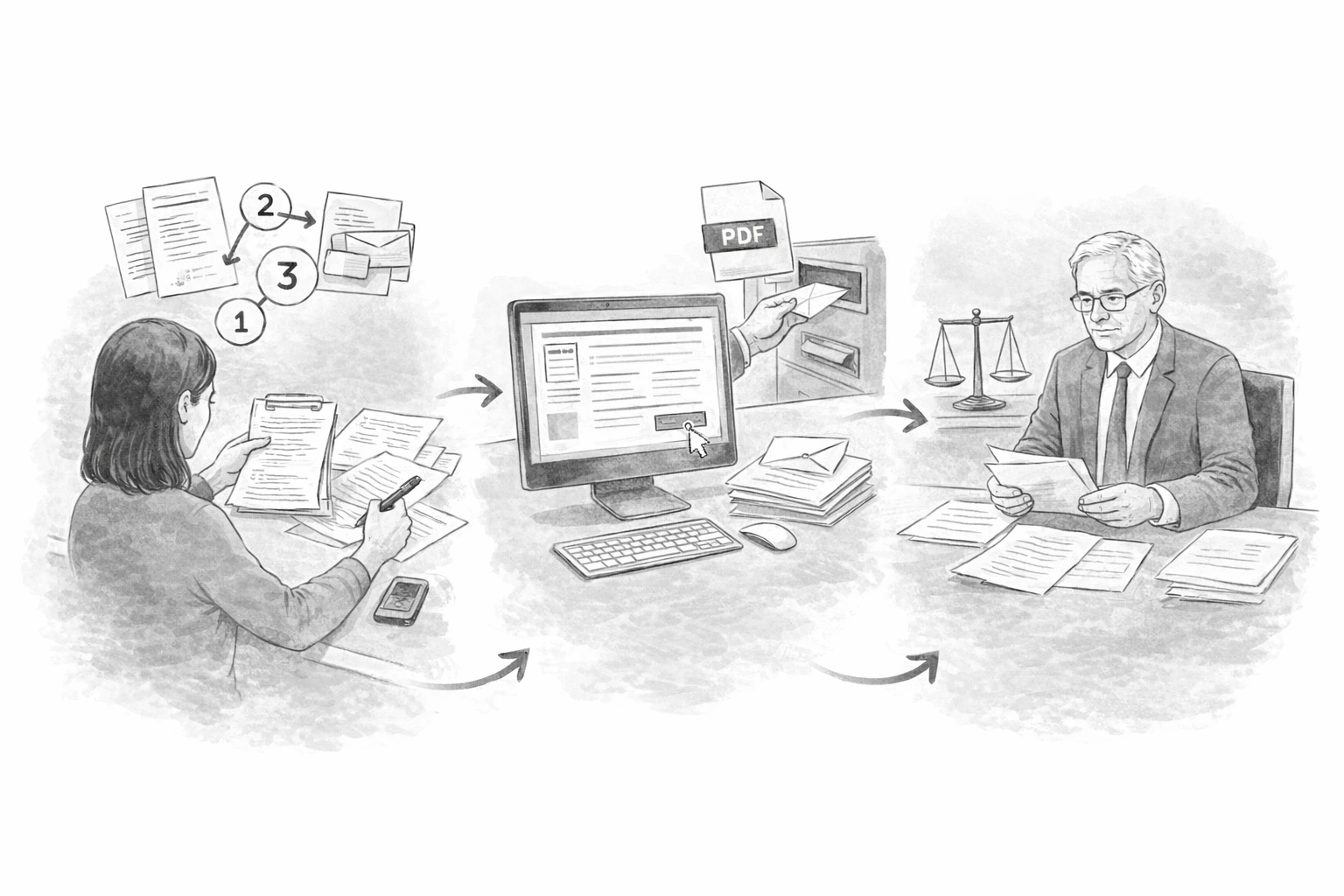
. pre> Subject: Request for public documents To [Authority], On the basis of the Freedom of the Press Regulation, I would like to hear the following: public documents: - [Describe the acts] - [Enter case, diary number, date or time period] - [Enter examples: decisions, journal entries, emails, protocols, invoices] I wish the documents digitally via email. If parts are subject to confidentiality, I request that the other parts be disclosed and that masking is done only where there is team support. If the documents are not disclosed in whole or in part, I request a written decision with reference to the law and information on how the decision can be appealed. /pre >In case of delay: remind and request notification
If the authority does not respond, send a factual reminder. Specify when you sent the first request and request schedule notification
. pre> I sent a public records request on [date]. Since such a request is to be dealt with promptly, I ask for your information when the documents are released or when a written decision is made. /pre >If the authority continues to delay, you can request that the matter be submitted to the competent decision maker. In the event of systematic delays or incorrect handling, JO notification may be relevant.
When you get no: request decision
Many people stop at an informal notice from the registrar or caseworker. Don't do that if you want to get the question tested. Write that you are requesting a formal decision. A written refusal decision should state the reasons and how to appeal.
It is also important to request a decision in case of partial refusal. If the agency worms large parts of an act, the worming may also need to be tested.
Strategy: request widely, but in batches
If you request “everything” in a large case, the authority may need a lot of time. Often it is better to start with the diary list, decisions and central actions. After that, you can request more specifically: emails of a certain period, invoices, service notes or documents mentioned in the decision
documentation.A good order is:
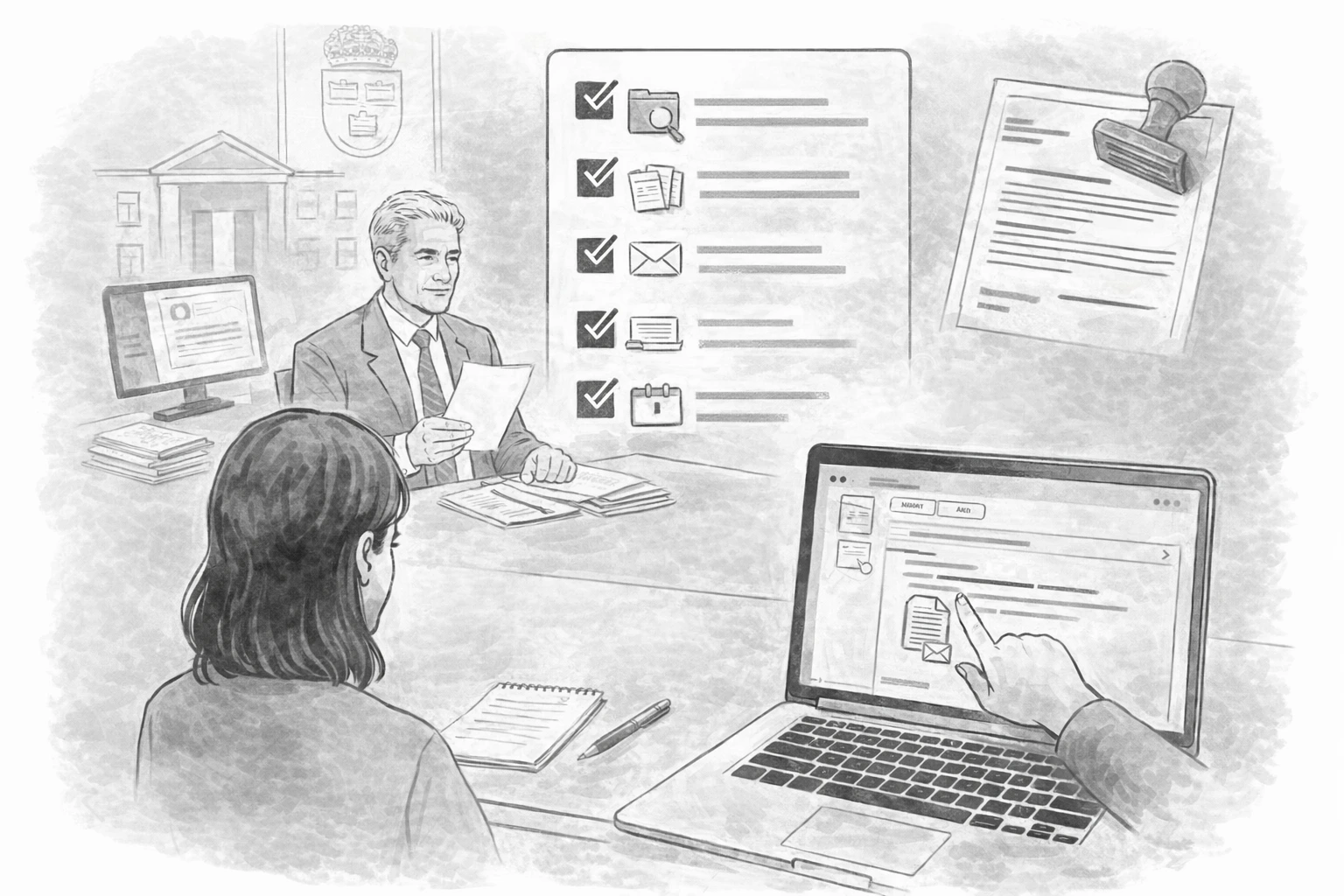
- Request a diary list or case list.
- Request decisions, decision support and communication.
- Identify gaps, attachments and references.
- Request supplementary documents with dates and names/functions.
- Request a written decision if something is denied.
Common mistakes
- You explain too much. Long stories make the request harder to handle. Write what documents you want.
- You verbally accept no. Request a written decision.
- You request too imprecise. Enter the period, case, diary number, person/function, or action type .
- You're missing out on masked disclosure. Ask for the rest to be disclosed even if parts are subject to confidentiality .
- You don't document delay. Save dates, emails and reminders .
Sources
- Riksdag: The Freedom of the Press Ordinance (1949:105)
- Riksdag: Publicity and Secrecy Act (2009:400)
- Government: The Principle of Publicity
For those who read under stress
The guide is meant as support when you already have a lot around your head. You don't have to read everything at once: start with the section that matches where you stand today and come back when the next step becomes relevant
.Affairs with authorities are rarely made better by the fact that you carry everything alone. Ask for help from a support person, lawyer or family member if you can — especially before decisions that
have a long impact.Common mistakes that make the case more difficult
- Trust only verbal promises without brief written acknowledgement or follow-up emails.
- Wait to request documents until the conflict is already locked -- then it will be heavier to show what was said.
- Write so long and emotionally driven that the authority stops answering the factual question.
- Miss deadlines for reconsideration or appeal because the decision was not read verbatim.
Mini-checklist before leaving the guide
- Do I have the date, diary/case number and name of the person handling the case (if you know)?
- Do I know what the next step is: reply, request out, recall, appeal or report?
- Have I saved emails and attachments in a place where I can find them in a week?