
This guide is informational. Always verify how the rules apply to your specific case.
The Point: On August 1, 2026, the crime of abuse of public position was introduced in Chapter 20, Section 2 of the Swedish Penal Code. It is a corruption-related intent crime—not a provision against “bad decisions.” This guide helps you assess whether something may fall under this, how to document, and how to report without confusing the tracks.
For background and legal analysis, see Motverket's review: Abuse of Public Position: the new crime from August 1, 2026.
What is covered – briefly
According to the law, anyone who, in the exercise of public service, public assignment or other public activity can be convicted if they intentionally, in violation of law or other regulation, take or omit an action to:
- personally gain an improper benefit, or
- someone else is to gain such a benefit, or
- improperly disadvantage someone else.
Penalty: fines or imprisonment for up to two years; for serious offenses, imprisonment for 1 year 6 months–6 years.
Important: Unlike misconduct in office, this crime does not require the exercise of public authority. It can apply to, for example, procurement, resource allocation, and publicly funded private assignments – but only in cases of intentional legal violations related to benefit or disadvantage.
Concrete examples (hypothetical)
The examples below are typical cases to understand the boundary. They are not assessments of real individuals. Intent and impropriety are always determined in each individual case.
1) Procurement / purchasing
- Can apply to: An official deliberately writes requirements so that only a certain supplier (friend/company) can win, despite it being against procurement rules, to give them the assignment.
- Likely does not apply to: A poorly but honestly written document where the need was misinterpreted without the intention to favor anyone.
2) Conflict of interest and decisions on funds
- Can apply to: A decision-maker deliberately participates in decisions on grants or agreements despite a known conflict of interest situation and despite the requirement to report/abstain from conflicts, to benefit a relative.
- Likely does not apply to: Ignorance of a distant relationship that is only discovered afterward, without intent to circumvent the conflict of interest.
3) Registers and internal information
- May apply to: An employee discloses protected information or conducts searches in violation of regulations to assist an acquaintance or harm someone.
- Closely related: Unauthorized access to registers may also constitute data intrusion – see unauthorized access to registers.
4) Private providers with public funds
- May apply to: Staff at a private healthcare provider performing publicly funded care deliberately circumvent rules to give undue advantage to someone (or disadvantage someone).
- Unlikely to apply to: A pure medical assessment you dislike, without unlawful intent.
What usually does not suffice
- You are dissatisfied with a decision on the merits (appeal instead).
- Negligence, stress, or “poor service” without intentional legal violation.
- Pure misjudgments or uncertain legal application.
- Labor law conflicts (wages, work environment, internal discipline) – different regulatory framework.
Administrative errors, delays, and conduct often fall under JO, not under this criminal provision. See JO complaint step by step.
Which path should you choose?
- Police report / prosecutor – when you suspect intentional legal violations for undue advantage or disadvantage.
- Whistleblowing – if you are in or close to the operation and want to alert internally/externally with protection – see whistleblower against authority.
- JO – when the issue is handling, delays, inadequate procedures, or treatment (supervision, not punishment).
- Appeal – when you want to change the actual decision – see appeal authority decision.
You can often pursue parallel paths: appeal the decision while simultaneously documenting suspected abuse of power. Do not confuse what you request in each channel.
How to Report – Practically
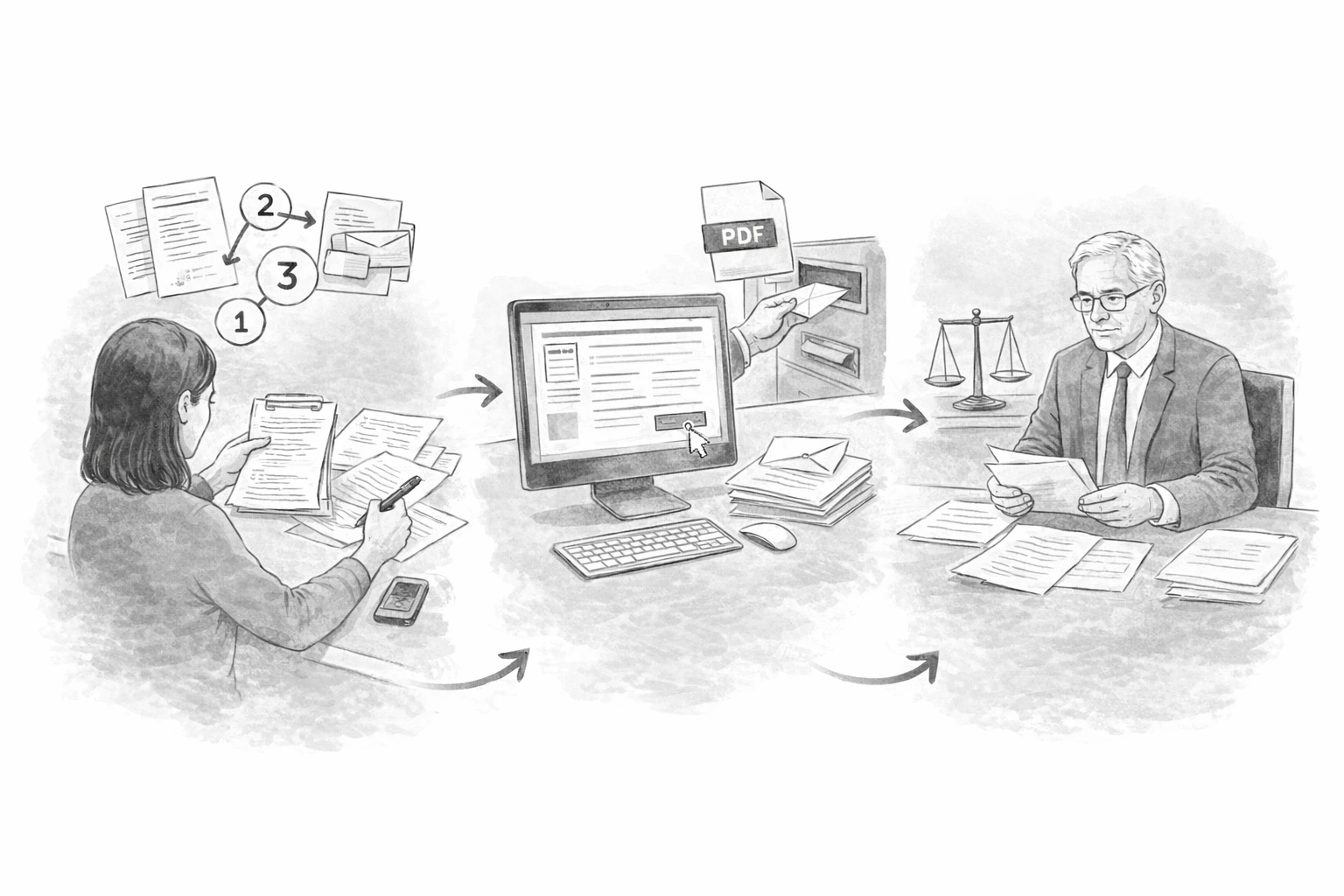
- Write a Timeline with dates, people, decisions, emails, and what you believe violates which rule.
- Gather Documentation before you report: decisions, case numbers, emails, procurement documents, conflict of interest information, invoices. See request documents.
- Separate Facts and Suspicion. Write what the documents show. Avoid claiming “crime is proven” – that is determined by the prosecutor/court.
- Police Report: Make the report via the Police (114 14 / local police station / e-service where available). Request a case number. You can also provide tips to the prosecutor through contact methods specified by the Åklagarmyndigheten.
- If You Are Employed by the State: The employer is obligated to report for prosecution upon reasonable suspicion. Document that you have alerted and when.
- If You Are in Municipality/Region/Private Sector: There is no formal obligation to report for prosecution according to Statskontoret's guidance, but suspicions should be reported to the police. Also use the whistleblower function if available.
- Follow Up in Writing if the case is closed: request justification and consider if JO/IMY/another labor crime track is more appropriate.
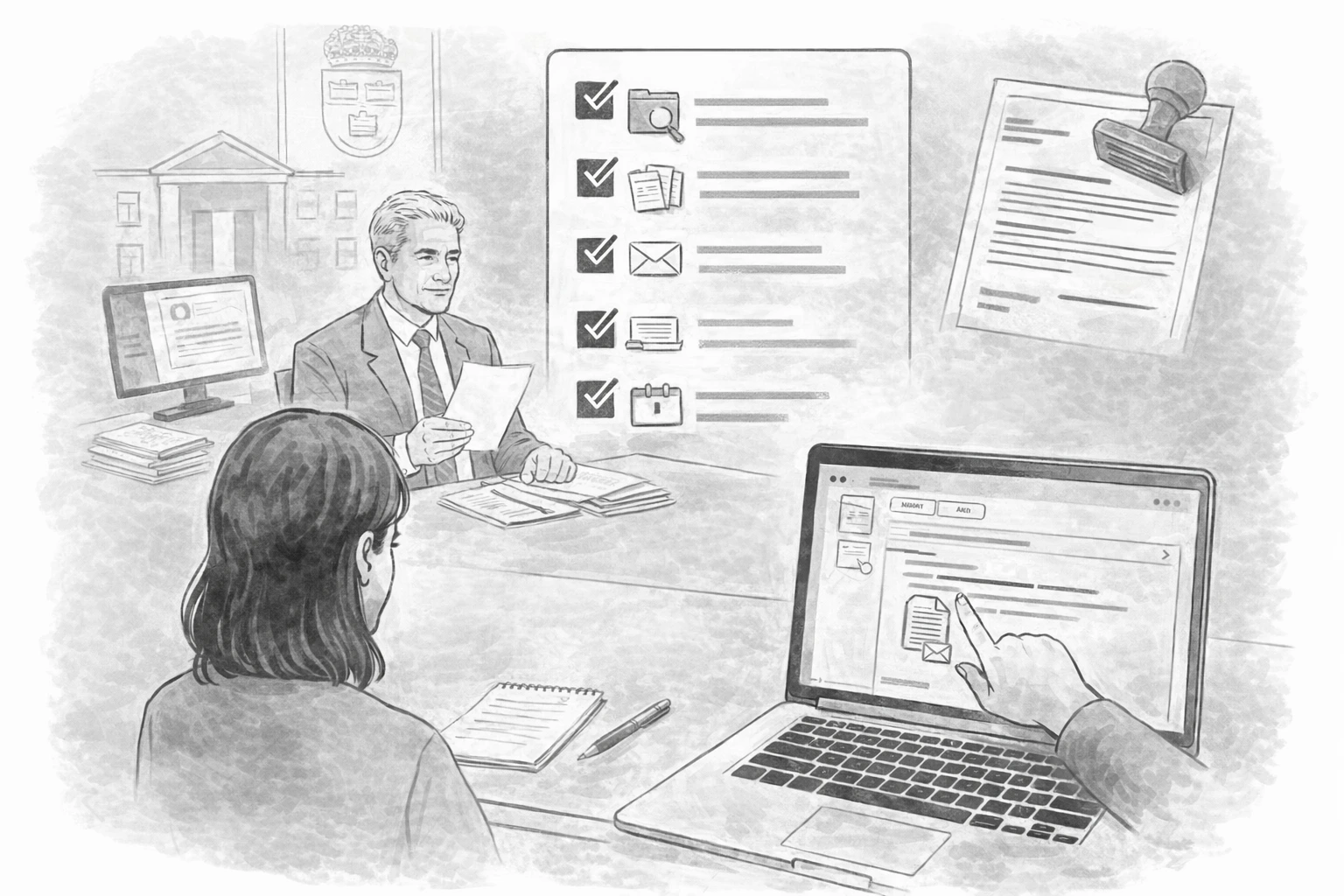
Checklist before police report
- Rule: Which law/regulation do you believe has been violated?
- Intent: Are there concrete signs of deliberate favoritism/disfavoritism – not just poor judgment?
- Benefit/disfavoritism: Who gained an advantage, or who was unduly disadvantaged?
- Documents: Do you have a case number, emails, decisions, procurement documents?
- Simultaneously: Do you need to appeal, report to the Parliamentary Ombudsman (JO), or whistleblow at the same time?
Template: short report text (customize)
You can start like this (replace italicized):
“I wish to report a suspicion of abuse of public position according to Chapter 20, Section 2 of the Penal Code. From March 1–15, 2026, decisions/actions were taken in case [case number] by [function/unit]. I believe the action contravenes [rule] and that there are grounds to investigate whether the purpose was to unduly favor [person/company] / disfavor [person]. Attached are timeline and documents A–D. I request a case number for the report.”
FAQ
When did the law come into effect?
August 1, 2026.
Can I report anonymously?
A police report is often not completely anonymous in practice. Whistleblower functions can provide stronger protection for those reporting from within – read the whistleblower guide.
Is it enough that I "know" it's wrong?
No. Focus on documentation: what happened, which rule, and signs of intent/benefit.
Is misconduct the same thing?
No. Misconduct often involves the exercise of public authority and can in some cases involve negligence. Abuse of public position is an intentional crime that can affect broader public activities.
Is this legal advice?
No. The guide is general information. Assessment in your case requires the file and sometimes a lawyer.
Sources and further reading
- Motverket: abuse of public position (review)
- Statskontoret: guidance on the new crime
- Prop. 2025/26:217
- Whistleblower against authority
- JO complaint step by step
- Requesting public documents
For those reading under stress
This guide is intended as support when you already have a lot on your mind. You don't need to read everything at once: start with the section that matches your current situation and return when the next step becomes relevant.
Dealing with authorities rarely improves by handling everything alone. Ask for help from a support person, lawyer, or relative if you can—especially before decisions with long-term effects.
Common mistakes that make the case more difficult
- Relying solely on verbal promises without brief written confirmation or follow-up email.
- Delaying the request for documents until the conflict is already locked—then it becomes harder to demonstrate what was said.
- Writing so extensively and emotionally that the authority stops responding to the substantive issue.
- Missing deadlines for reconsideration or appeal because the decision was not read verbatim.
Mini-checklist before you leave the guide
- Do I have the date, diary/case number, and the name of the person handling it (if you know)?
- Do I know what the next step is: respond, request, remind, appeal, or report?
- Have I saved emails and attachments in a place where I can find them in a week?